



Kiraz Criminal Lawyer
Kiraz is a mountainous and rural district at the easternmost tip of Izmir, lying between the Bozdağlar and the Aydın Mountains; its distance from Konak and its rugged geography directly affect access and service-of-process periods in the functioning of the criminal process. The search for a Kiraz criminal lawyer most often comes onto the agenda in files of injury, threat and damage to property arising from disputes over animal husbandry, pasture-forest boundaries and farmland. First-instance proceedings are conducted at the Kiraz Courthouse, while files within the scope of assize offences are heard within the jurisdiction of the Ödemiş Assize Court. Institutions such as investigation, custody, mediation and HAGB function here too within the same legal framework; the process must be planned with the district's remote and mountainous structure in mind. The outcome cannot be guaranteed at any stage.

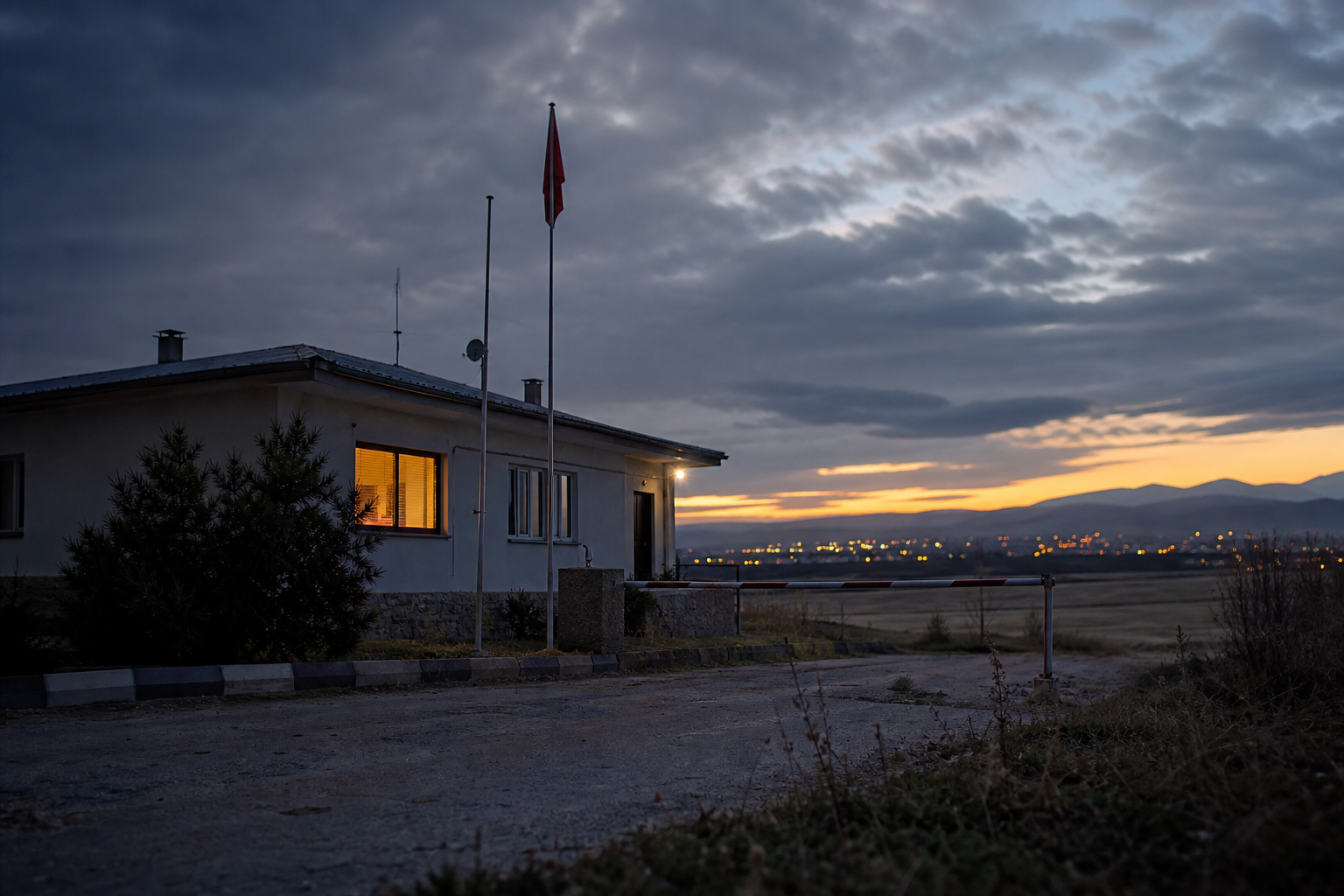
Kiraz, at the easternmost tip of Izmir, built on a narrow graben plain encircled by the Bozdağlar to the north and the Aydın Mountains to the south, is one of Izmir's most mountainous and most remote districts. About 140 kilometres from Konak, it is a small rural settlement surrounded by extensive forest and pasture areas; most of the population lives in villages outside the district centre.
This distance and mountainous geography also affect the practical functioning of the criminal trial: access to hearing dates, the timely arrival of service of process at the villages, and regular communication with defence counsel require more planning than in the central districts. Since the district's economy rests on agriculture and animal husbandry, a significant part of criminal files is also linked to disputes arising from pasture, grazing land and land boundaries; each event is assessed according to its own concrete conditions.
The Investigation Process and Access in a Mountainous and Remote Settlement
Some of the villages attached to Kiraz are reached even from the district centre via mountain roads; this situation can affect the time it takes law enforcement to reach the scene of an incident once it is reported, and the timing of the evidence-gathering process. The investigation stage proceeds within a different logistical reality compared with the densely populated districts of the provincial centre.
Law Enforcement and the Gendarmerie Zone Practice
In rural and mountainous districts, first response to public order and judicial incidents is largely carried out by the gendarmerie. The distance between villages and road conditions are practical elements that must be taken into account in planning proceedings such as taking statements and on-site inspection.
Service-of-Process Periods and the Location of Remote Villages
The fact that a suspect or victim resides in a remote village can lengthen the time it takes for service of process to actually reach them. Although the statutory periods do not change, the moment a person actually learns of a summons or a decision may be delayed, which makes careful tracking of the periods important.
The Distance Factor in Communication with Defence Counsel
Defence counsel assigned in a criminal file in Kiraz may need to support communication with both the district centre and the parties in the villages by telephone and digital means. In such files, where face-to-face meetings may take time because of the mountain roads, early and regular communication contributes to preventing a loss of rights.
This geographical reality is one of the clearest points at which criminal processes in Kiraz differ from similar files in the central districts. Taking this distance factor into account from the very start of the process is a practical necessity for both the defence and the victim's side.
Animal-Husbandry and Grazing-Land Disputes, Injury Files
The foundation of Kiraz's economy is agriculture and animal husbandry; extensive pasture and forest areas can from time to time give rise to disputes among neighbours or families over the grazing of animals and the use of land. Such disputes can sometimes turn into criminal files such as intentional injury, threat or damage to property.
Grazing-Boundary and Animal-Grazing Disputes
Disputes over which land belongs to whom, or within which boundaries animals may be grazed, can in some cases go beyond a verbal argument and turn into physical interference. In such incidents, witness statements and documents relating to the land boundary play an important role in the assessment of the evidence.
Livestock Loss and Damage Allegations
Disputes beginning with an allegation that a person's animal was harmed or died on another's land may turn, through mutual accusations, into a file of damage to property or injury. In these files, a veterinary report and the physical evidence at the scene can be decisive.
Intentional Injury in Family and Neighbourhood Relations
In a small and mutually acquainted rural population, long-standing family or neighbourhood feuds can sometimes turn into the offence of intentional injury. This offence, as a rule, falls within the jurisdiction of the criminal court of first instance and, where the conditions exist, may be assessed within the scope of mediation.
In such files, defence counsel or the victim's representative can contribute to the sound assessment of the evidence by correctly setting out the history of the feud and the land/animal-husbandry context. The outcome nevertheless still takes shape according to the concrete conditions of each event.
Allegations of Offences Arising from Pasture, Forest and Land Boundaries
Kiraz's extensive forest and pasture assets also form a ground on which allegations such as interference with land boundaries, unauthorised logging or encroachment on forest land can come onto the agenda. Such files are conducted intertwined with special legislative provisions.
Allegations of Interference with Forest Land
Agricultural activity or construction carried out on land close to the forest boundary can from time to time become the subject of examination under forestry legislation. In these files, cadastral and forest-boundary-determination records are of great importance as evidence.
Disputes within the Scope of the Pasture Law
Allegations that pasture, summer-pasture or winter-pasture areas are used outside their allocated purpose can, alongside their administrative dimension, sometimes also concern criminal proceedings. In such files, the land's allocation record and the state of its actual use are assessed together.
The Evidentiary Value of Cadastral Records
In rural land disputes, title deed and cadastral records are a decisive piece of evidence in determining who violated which boundary. The timely and complete submission of these documents to the file is important for the sound construction of the defence or the complaint.
The Functioning of the Investigation and Prosecution Stages
Criminal proceedings, within the framework of the Code of Criminal Procedure, run in two fundamental stages: investigation and prosecution. The investigation begins with the public prosecutor's office looking into a suspicion of an offence; the prosecution, on the other hand, opens with the court's acceptance of the indictment.
The Investigation Process and Prosecutorial Proceedings in Kiraz
In an incident attached to Kiraz, the investigation may be conducted through coordination between the district's judicial units and, where necessary, specialised law-enforcement units in Izmir. Evidence gathering, the taking of statements and the necessary protective measures are carried out at this stage on the instruction of the public prosecutor.
The Indictment and Transition to Prosecution
If sufficient suspicion is reached at the end of the investigation, an indictment is drawn up, and with the court's acceptance of it, the prosecution begins. The charges and evidence set out in the indictment form the basic framework determining what the defence will focus on.
Objection to the Decision That There Is No Ground for Prosecution
If sufficient evidence is not found, the public prosecutor's office may decide that there is no ground for prosecution; this decision may be objected to before the criminal judgeship of the peace within the statutory period. For a victim residing in a remote village, following this period requires particular care.
The Rights of the Suspect and the Defendant
The rights granted to the suspect and the defendant in criminal proceedings are fundamental safeguards resting on the presumption of innocence. These rights are applied equally, regardless of the person's location or socio-economic conditions.
The Right to Remain Silent
The suspect and the defendant have the right not to make a statement regarding the charge directed at them; remaining silent cannot be interpreted against them. Despite a rural region's accustomed culture of verbal explanation, the conscious use of this right is important for the defence.
Benefiting from the Assistance of Defence Counsel
Every suspect may benefit from the legal assistance of defence counsel from the beginning of the investigation. A person who is not in a position to choose defence counsel and who requests one is assigned counsel by the bar association; in cases prescribed by law, this assignment is mandatory.
The Right to Be Informed
The offence attributed to a person and the rights they hold are notified to them in a manner they can understand. Since the level of education and familiarity with legal processes may differ among parts of the rural population, it is particularly important that this notification be given clearly and comprehensibly.
The Role of Defence Counsel (Criminal Lawyer)

Defence counsel is the person who follows the defence right of the suspect or defendant from the first moment of the investigation through to the legal remedies. In a remote district like Kiraz, this role requires both legal and logistical coordination.
Legal Support during Statement and Interrogation
By being present at statement and interrogation proceedings, defence counsel contributes to preventing procedural irregularities and reminds the suspect of their rights. This is a safeguard that can directly affect the later stages of the file.
File Examination and Assessment of Evidence
Defence counsel may, as a rule, examine the investigation file and take copies. In files arising from land, pasture or animal husbandry, the correct assessment of technical documents such as cadastral records and veterinary reports is decisive in constructing the defence.
Process Coordination in Remote Settlements
Regular communication with parties in villages attached to Kiraz requires that hearing and service-of-process schedules be followed on time. Defence counsel or the representative establishing this coordination early helps the process to proceed without disruption.
Custody and Detention
Custody and detention are protective measures that restrict personal liberty and are regulated in detail in the Code of Criminal Procedure. These measures are not a penalty but temporary precautions intended to ensure the security of the proceedings.
The Duration of Custody and Its Application in a Remote District
Custody is the detention of an apprehended person for a certain period by decision of the public prosecutor's office; the law has set an upper limit on this period. In a remote district like Kiraz, the referral of a person taken into custody to the nearest duty court may require additional time planning because of distance.
Detention and the Principle of Proportionality
Detention is an exceptional measure that can only be applied by decision of a judge where a strong suspicion of an offence and a ground for detention exist together. Detention should not be resorted to where it is disproportionate to the importance of the matter and the expected penalty, or where judicial control is sufficient.
Objection to Detention and Judicial Control
Objection may be made against a detention decision within the statutory period; judicial control measures may also be requested instead of detention. The continuation of detention is reviewed at certain intervals, and a request for release may be made at these reviews.
The Jurisdiction of the Ödemiş Assize Court over Kiraz Files
Assize courts are tasked with hearing offences of the gravity prescribed by law. Although Kiraz has a stand-alone first-instance courthouse of its own, files within the scope of assize offences are heard within the jurisdiction of the Ödemiş Assize Court; this jurisdiction also includes Tire, Bayındır and Beydağ.
The First-Instance Function of the Kiraz Courthouse
The Kiraz Courthouse conducts proceedings within the scope of the criminal court of first instance and the civil peace court in the district, as well as certain protective-measure decisions at the investigation stage. Files falling within the jurisdiction of the assize court, on the other hand, are moved to the court in Ödemiş.
Transfer to Ödemiş and Following the Hearings
In a Kiraz file within the scope of assize offences, the parties may need to go to Ödemiş for the hearings. This additional distance requires the defence and the victim's side to plan the hearing schedule in advance.
Panel Structure and Mandatory Defence Counsel
Assize courts conduct trials as a panel composed of one presiding judge and two members. For certain offences within the scope of assize proceedings, if the defendant has no defence counsel, the assignment of counsel by the bar association is mandatory.
Competent Criminal Courts in Kiraz
In terms of criminal courts, jurisdiction as a rule belongs to the court of the place where the offence was committed. Offences alleged to have been committed within the boundaries of Kiraz and not falling within the scope of assize proceedings are heard at the criminal court of first instance within the Kiraz Courthouse.
Files within the Scope of the Criminal Court of First Instance
Offences such as simple injury, threat, insult and damage to property mostly fall within the jurisdiction of the criminal court of first instance. A significant part of the animal-husbandry- and land-related feuds in Kiraz is also assessed within this scope.
The Function of the Criminal Judgeship of the Peace
Criminal judgeships of the peace, as a rule, rule on protective measures during the investigation stage (such as detention, search and seizure) and objections directed against them; they do not conduct trials. Knowing this distinction is important for correctly determining which authority to apply to.
The Current State of the Judicial Organisation
Since changes may be made in the judicial organisation from time to time, it is appropriate to confirm the current state of jurisdiction and competence with the Kiraz Courthouse or the Izmir Bar Association.
Following the Rights of the Victim and the Complainant
In criminal proceedings, not only the suspect and the defendant but also the victim and the complainant who have suffered from the offence have rights. A criminal lawyer may undertake the follow-up of the aggrieved party's rights in the capacity of victim or complainant representative.
The Complaint Period and Submission of Evidence
The victim may exercise the right of complaint and submit evidence to the investigation. In a rural district, witnesses being village residents makes it all the more important that statements be taken in a timely and orderly manner.
Joinder of the Case (Intervention)
At the prosecution stage, the victim may request to join the case; with the acceptance of the request, the joined party becomes more actively involved in following the course of the trial and may resort to the legal remedies. In injury files arising from animal husbandry, this participation may be important for proving the damage.
Mediation
Mediation is an institution regulated in Articles 253 and 254 of the Code of Criminal Procedure that allows, in certain offences, the suspect/defendant and the victim to reach an agreement through a mediator. In a rural, mutually acquainted social structure, this institution may carry a separate practical importance.
Offences within the Scope of Mediation
The simple forms of intentional injury, threat and damage to property are frequently seen in practice within the scope of mediation. Such offences arising from disputes over pasture or animals in Kiraz may also be assessed within this scope.
The Role of Mediation in Preserving Neighbourhood Relations
A mediation process that is mindful of the long-term relations of parties living in the same village or in nearby settlements can contribute to resolving the feud before it grows. However, the parties are not obliged to reach agreement; the right not to accept the offer is reserved.
The Results of Reconciliation
If reconciliation is achieved and the obligation is fulfilled, the result may be the dismissal of the investigation or the case. If reconciliation cannot be achieved, the process continues according to the general provisions.
HAGB, Deferral and Alternative Sanctions
There are various institutions that soften the manner of execution of the penalty even in the event of conviction. These institutions depend on the existence of the conditions prescribed by law and generally on the defendant's acceptance.
Deferral of the Announcement of the Verdict (HAGB)
The deferral of the announcement of the verdict is regulated in Article 231 of the Code of Criminal Procedure. For penalties below a certain limit, where the legal conditions exist and the defendant accepts, the verdict is not announced and the defendant is placed under a supervision period.
Deferral of the Penalty
Deferral is the conditional waiver, under certain conditions, of the execution of an imposed sentence of imprisonment. If the supervision period is passed with good conduct, the penalty is deemed to have been executed.
Judicial Fine and Alternative Sanctions
Short-term prison sentences may, if the conditions exist, be converted into a judicial fine or into the alternative sanctions enumerated in the law. Which institution may be applied in the concrete case is assessed according to the type of the penalty and the situation of the defendant.
Appeal and Cassation
Against the decision of the first-instance court, the legal remedies may be resorted to within the period and conditions prescribed by law. The ordinary legal remedies in criminal proceedings are appeal and cassation.
Appeal Application and the Izmir BAM
Appeal applications against criminal decisions rendered by the courts in Kiraz or Ödemiş are examined by the criminal chambers of the Izmir Regional Court of Justice. An application being made from a remote district makes it all the more important that the statutory period be followed carefully.
Cassation Review
Those decisions of the regional court of justice for which cassation is possible under the law may be appealed to the Court of Cassation within the period. Because some decisions are final, not every decision may be open to cassation.
Criteria for Choosing a Good Criminal Lawyer
Instead of a search for "the best criminal lawyer," it is a sounder approach to focus on objective criteria when making a choice. No lawyer can guarantee an outcome such as acquittal or release; every file is assessed according to its own concrete state of evidence. The main criteria that may be taken into account when seeking legal support in Kiraz or across Izmir are as follows:
- Bar registration: It is a fundamental requirement that the lawyer be registered with the Izmir Bar Association and operate with a licence.
- Experience in remote districts: Being familiar with following the process in districts attached to the Ödemiş jurisdiction, like Kiraz, can be a practical advantage.
- Accessibility: In situations with running time limits such as custody and detention, the ability to establish rapid communication carries importance.
- Realistic information: An approach that honestly conveys risks and probabilities, rather than one promising a definite outcome, should be preferred.
- Transparency: Communication that clearly explains the stages of the process, the possible scenarios and the likely expenses inspires confidence.
These criteria may be guiding in finding legal support suited to the person's own situation. You can assess criminal law services across Izmir from the Izmir criminal lawyer page, and the other legal areas in Kiraz from the Kiraz lawyer service page.
Kiraz Criminal Lawyer Fees
In criminal files, the lawyer's fee is determined within the framework of the Minimum Attorney's Fee Tariff, which is updated each year. This tariff shows the lowest fee the lawyer may charge; the concrete fee, on the other hand, is freely agreed between the lawyer and the client according to the type, stage, scope and required effort of the work.
An investigation-stage defence conducted at the Kiraz Courthouse and a lengthy prosecution at the Ödemiş Assize Court require different effort and time, so pricing varies accordingly. Transport planning for hearing and on-site-inspection days in the remote district must also be discussed from the outset as part of the process.
In addition, costs such as fees, expert, witness and service-of-process expenses that may arise during the trial process are items separate from the lawyer's fee. For a transparent working relationship, agreeing on the fee and expenses in writing from the outset is beneficial for both the client and the lawyer. You can review the relevant pages for the other service areas across Izmir.
The information here is for general informational purposes; it does not constitute legal advice. In criminal proceedings the outcome cannot be guaranteed; every file varies according to the concrete evidence and the characteristics of the incident. For definite information and an assessment specific to your file, it is recommended that you consult a lawyer. Contact: 0553 595 67 82 — Milli Kütüphane Cd. İ. Tepeköylü İş Merkezi No: 17/105, 35260 Konak/İzmir (available 24/7).
Questions on This Topic
 Izmir
IzmirKonak Lawyer
Konak is the historic and administrative core of Izmir; the dense commercial life around the Kemeraltı bazaar, Konak Square and the Alsancak Port also brings with it various legal disputes in daily life. Workplace rent, commercial disputes, title deed matters and urban transformation are frequently on the agenda in the district. Cases and proceedings attached to Konak are, as a rule, heard within the jurisdiction of the Izmir Courthouse and the Izmir Assize Court. Av. Aydın provides legal support in various fields, primarily divorce, criminal, rent, real estate, inheritance and compensation. When looking for a Konak lawyer, setting the process up correctly from the outset reduces possible losses of rights; it is useful to have a prior assessment with a lawyer.
View Details Izmir
IzmirAlsancak Lawyer
The first thing people looking for an Alsancak lawyer wonder about is in which courthouse their cases will be heard. Alsancak, the lively and prestigious central district of Konak on the shore of the bay, is an area where various legal disputes come onto the agenda because of the density of its cafes, restaurants and entertainment venues, its office and company fabric, and its stock of valuable real estate. Workplace rent, commercial disputes, service-sector labour law, title deed and real estate matters, and company and contract issues are frequently encountered headings in the neighbourhood. Since Alsancak is a neighbourhood attached to Konak, cases and proceedings here are, as a rule, heard within the jurisdiction of the Izmir Courthouse and the Izmir Assize Court. Av. Aydın provides legal support in various fields, primarily divorce, criminal, rent, real estate, inheritance and compensation. When looking for an Alsancak lawyer, setting the process up correctly from the outset reduces possible losses of rights.
View Details Izmir
IzmirGüzelyalı Lawyer
The first question that people looking for a Güzelyalı lawyer usually ask is which courthouse will hear their case. Güzelyalı is a well-established and settled coastal neighbourhood attached to the Konak district; the seaside boulevard and promenade, the valuable apartment fabric, the upper-middle-income settled population and its connection by the İZBAN suburban line and tram give it a distinctive character. Because of its long-standing housing stock, title deed and real estate matters, condominium ownership, the renovation of old apartment buildings and rent disputes frequently come onto the agenda in the neighbourhood, while its settled family structure also brings family and inheritance matters to the fore. Since Güzelyalı is attached to Konak, cases and proceedings here are, as a rule, heard within the jurisdiction of the Izmir Courthouse and the Izmir Assize Court. Av. Aydın provides legal support in various fields, primarily real estate, rent, divorce, inheritance, criminal and compensation. When looking for a Güzelyalı lawyer, setting the process up correctly from the outset reduces possible losses of rights.
View Details