



Kiraz Divorce Lawyer
Kiraz, at the easternmost tip of Izmir, is a mountainous rural district built on the graben plain between the Bozdağlar and the Aydın Mountains, whose economy rests on agriculture and animal husbandry. This structure also determines the subject that comes to the fore in the search for a Kiraz divorce lawyer: how a herd of livestock, pasture use and farmland acquired by inheritance will be divided in a divorce. Since the district has its own courthouse, cases can be heard locally; whether the process proceeds by agreement or as contested, custody, alimony and the liquidation of the property regime are headings that affect one another. In families engaged in livestock farming, it can be useful to obtain an opinion in advance from a Kiraz divorce lawyer so that these headings are set up correctly.
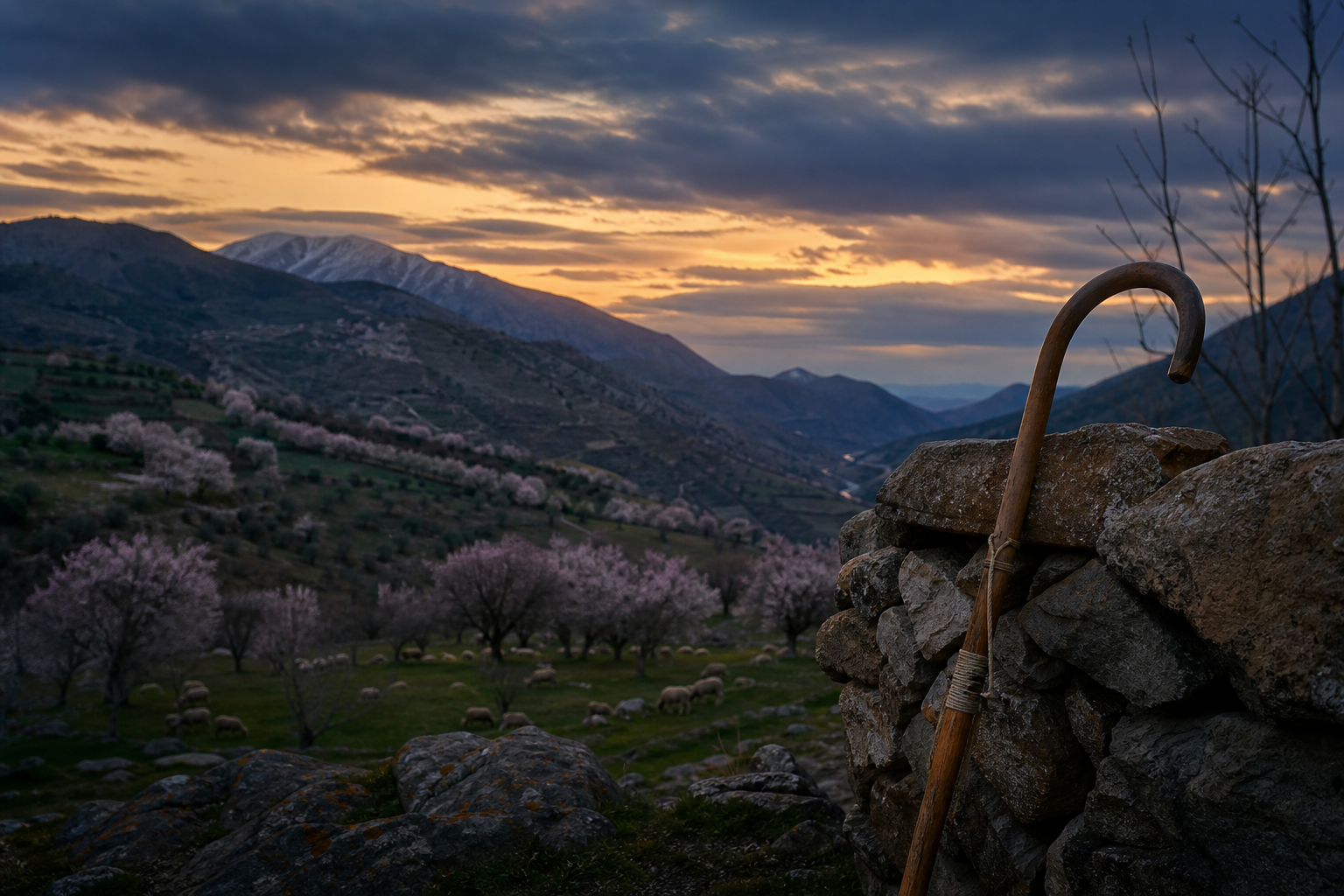
Kiraz is built on a graben plain at the easternmost tip of Izmir, about a hundred and forty kilometres from the provincial centre, squeezed between the Bozdağlar to the north and the Aydın Mountains to the south. A large part of the district's territory is mountainous and forested; the settlement is spread across villages that lean on extensive pasture areas, and the household economy is largely fed by animal husbandry and agriculture.
This structure also lends a character of its own to divorce disputes in the district: in many families, a herd of small or large livestock, pasture rights, and fields or orchards acquired by inheritance form an important part of the wealth accumulated over the marriage. For this reason, a divorce process in Kiraz is not limited to custody and alimony alone; the question of how the livestock assets and the land will be assessed also comes onto the agenda from the outset.
The Property Regime for Families with a Livestock-Farming Business

With divorce, the property regime between the spouses ends and the liquidation comes onto the agenda. Unless otherwise agreed by law, the statutory regime that applies is the regime of participation in acquired property, and it applies as a rule to marriages established after 2002.
The Nature and Valuation of the Herd of Livestock
A herd of small or large livestock that has become a family business in Kiraz may be the subject of a separate assessment in the liquidation. While the portion of the herd raised through labour during the marriage may be counted as acquired property, animals coming by inheritance or gift may remain within the scope of personal property; making this distinction requires a technical examination.
Structures such as barns and sheepfolds in the livestock-farming business, as well as vehicles and equipment purchased for the business, may also fall within the scope of the liquidation. Resort to an expert examination for the determination of value is a frequently encountered situation.
Separating Out Land Acquired by Inheritance
In Kiraz it is often seen that family land is passed down from generation to generation by inheritance. While a field or orchard acquired by inheritance is counted as personal property, an investment made in that land during the marriage or the income obtained from working the land may constitute a separate item.
Possession not registered at the land registry or shared family land may require additional examination. Since these cases can also be filed separately from the divorce, attention must be paid to the statute of limitations and to the order of claims.
Calculating Alimony from Seasonal Agricultural Income
Several types of alimony may come up in a divorce case, and each serves a different purpose. Not confusing these types is important for structuring the claims correctly.
Interim, Poverty and Contribution Alimony
Interim alimony is a temporary alimony ordered while the case is pending, to secure the livelihood of the spouse or the child. Poverty alimony is granted, upon request, to the party who will fall into poverty because of the divorce, provided that they are not more at fault. Contribution alimony, on the other hand, is the contribution made by the party who does not obtain custody towards the child's care and education expenses, and is granted for the benefit of the child.
Documenting Harvest and Herd Income
Since a large part of income in Kiraz comes from animal husbandry and agriculture, this income is often distributed unevenly over the year: it is concentrated in certain months during the harvest period and livestock sales, while it may contract in winter. This situation can make it difficult to establish the real level of income in determining the amount of alimony.
In such situations, criteria such as the size of the land, the number of animals, the produce yield of previous years and the general standard of living can contribute to the assessment. If circumstances change, an increase, reduction or removal of the alimony may be requested.
Custody of a Child Growing Up in the Village

Custody refers to the rights and obligations regarding the care, education and representation of the joint children. In deciding with whom custody will remain in a divorce, the sole criterion is the superior benefit of the child; the request of the mother or the father does not take precedence over this criterion.
Access to School and the Environment the Child Is Accustomed to
In Kiraz's mountainous and scattered village settlement, some families live in villages far from the district centre. As the court assesses the child's age, the environment they are accustomed to, the conditions for access to school and the environment the parties can provide the child, the distance between the village and the district centre may also stand out as a practical factor.
The opinion of a child of the age of discernment is taken where necessary; the opinion of experts such as a psychologist or a social worker may be sought. These conditions are assessed separately in each concrete case.
Personal Relationship According to the Agricultural Calendar
A personal relationship is arranged between the child and the party with whom custody is not placed; this arrangement, too, is made with the child's benefit in mind. In an environment where the harvest and the care of the animals are seasonally concentrated, the parties' agricultural work calendar may be taken into account in determining the days and hours of the personal relationship.
Custody is not a matter that constitutes a final judgment; if circumstances change significantly, a change of custody may separately be litigated. In that case too, the criterion remains the superior benefit of the child.
The Divorce Process in a Mountainous and Remote Settlement
The divorce process begins with the submission of the statement of claim to the competent court. For spouses residing in Kiraz, this application can be made to the competent court at the Kiraz Courthouse without going to the distant centre. After the petitions are exchanged, the stages of preliminary examination, investigation and oral proceedings follow.
Service of Process Periods in Mountain Villages
Kiraz's mountainous and scattered village settlement can be a practical factor in the functioning of the process. One of the parties residing in a remote mountain village may require additional time for the service of process to arrive and for attendance at hearings; transport conditions dependent on the roads may also affect this.
Keeping address records up to date and serving process to the correct address helps to prevent unnecessary delays. Since disruptions in service of process can prolong the proceedings, it is important that the address information be correctly notified from the outset.
Factors That Prolong or Shorten the Proceedings
While a result can be obtained in a single hearing in uncontested divorce, contested divorce may take longer due to the gathering of evidence and the hearing of witnesses. The need for an expert examination for the valuation of livestock assets or land in the liquidation of the property regime can also be a factor that prolongs the duration; for this reason it is not possible to give a definite duration.
While the case is pending, interim measure decisions may be taken on matters such as the care of the children, the parties' livelihood and the use of the family residence. After the decision is rendered, the parties may apply to appeal within the time limit; the appellate review of decisions rendered from Kiraz is carried out by the Izmir Regional Court of Justice.
The Protocol in Uncontested Divorce and the Division of Herd and Land
Uncontested divorce is the path by which spouses end the marital union by agreeing on all the consequences of the divorce. Under the Turkish Civil Code, resort to this path requires that the marriage has lasted at least one year. The spouses may file the case jointly, or one of them may accept the case filed by the other.
The Requirement of Clarity in the Protocol
At the foundation of the process lies a divorce protocol prepared jointly by the parties. This protocol regulates headings such as custody, personal relationship with the child, alimony, division of property and, if any, compensation. By hearing the spouses in person, the judge checks whether their will is free, and examines the arrangement particularly with regard to the interests of the children.
In a district like Kiraz, where animal husbandry and farmland hold an important place in the family economy, the herd and the land must be regulated clearly and item by item in the protocol; an item left unclear may turn into a new case after the divorce.
The Situation Where the Protocol Is Rejected
If an arrangement contrary to or incomplete in terms of the child's benefit is seen in the protocol, the judge may ask for a change; if the parties do not accept this, the case may turn contested. For this reason, it carries importance that the protocol be prepared carefully from the outset; when the conditions are met, an uncontested divorce can be concluded in a relatively short time.
Fault and the Effect of the Small Settlement in the Contested Process
Contested divorce comes onto the agenda where the spouses cannot agree on the will to divorce or on the consequences of the divorce. In this process, fault, evidence and claims are discussed in detail before the court, and the proceedings generally take longer.
Constructing the Claims in the Petition
The parties set out their claims through petitions; witness statements, documents and, where necessary, expert assessments enter the file. Adding a fact later that was not put forward in the statement of claim is, as a rule, subject to the other party's consent; for this reason claims must be set out fully from the outset.
Witness Testimony in a Settlement Where Everyone Knows Each Other
The determination of fault directly affects not only the divorce decision but also claims such as compensation and poverty alimony. In a small settlement like Kiraz where everyone knows each other, it is seen that witness statements can hold an important place in the file. That said, witness testimony alone is not always decisive on its own; the court assesses the consistency of the statements together with the other evidence in the file.
Grounds for Divorce
The Turkish Civil Code ties divorce to specific grounds, and these grounds are divided into specific and general grounds. Which ground is relied upon directly affects the burden of proof and the course of the case.
Specific Grounds and the Time Condition
Among the specific grounds listed in the law are adultery, attempt on life and gravely degrading or dishonouring treatment, commission of a crime and leading a dishonourable life, desertion and mental illness. For these grounds it is required that the conditions defined in the law be proven to have occurred in the concrete event. For example, in a divorce based on desertion it is required that the period and notice conditions foreseen in the law have been fulfilled; in some specific grounds, attention to the time limit for filing a case is important in preventing a loss of rights.
Fundamental Breakdown of the Marital Union
The ground most frequently relied upon in practice is the fundamental breakdown of the marital union. Under this general ground, it must be shown that the joint life has become unbearable for the parties; the concrete circumstances of the event and the fault situation of the parties are decisive. The law also regulates, as a further possibility for divorce, the situation where the joint life cannot be re-established after a case rejecting a divorce becomes final.
When the Family Residence Is a Village House
The family residence is the joint home in which the spouses live together, and the law grants it special protection. Even if the residence is registered in the name of one of the spouses, by placing a family residence annotation on the land registry, its transfer without the other spouse's consent or the limitation of the rights over it can be prevented.
The fact that the family residence in Kiraz is often a village house found together with outbuildings such as a barn or a sheepfold may require additional assessment in the annotation and the arrangements for use; the fact that the residence is intertwined with farmland may require that the liquidation and the use of the residence be handled together. Who will remain in the residence during the divorce process may also be arranged provisionally; this arrangement is made especially with the benefit of the children in mind where children are involved.
In cases of domestic violence, threat or danger of violence, protective and preventive measures may be requested under Law No. 6284. Measures such as a restraining order, non-approach to the residence and non-contact can be taken quickly by decision of the administrative authority or the judge in cases where delay is objectionable, and may also be requested independently of the divorce case.
The Return of Wedding Jewellery in Rural Tradition
Jewellery items refer to gold, bracelets, money and similar valuable ornaments given at ceremonies such as weddings and engagements. Who these items belong to and their return is a frequently encountered matter of dispute in the divorce process.
The Presumption of Belonging and the Burden of Proof
In settled practice, jewellery items are, as a rule, considered to belong to the woman regardless of on whom they were pinned; the party asserting otherwise is expected to prove it. If the items are not returned or are converted to cash, return in kind or payment of their value may be requested.
Gathering Evidence at Village Weddings
In an environment like Kiraz where traditional village wedding customs remain strong, the quantity of jewellery may be high, but the fate of this jewellery is often not documented. For this reason, witnesses, photographs, video or wedding recordings regarding the type, quantity and subsequent state of the ornaments carry great importance. This claim may be put forward within the divorce case or may be filed as a separate case.
The Basis of Compensation Claims
In divorce, depending on the fault situation, claims for pecuniary and non-pecuniary compensation may come onto the agenda. These claims are an important part of the financial consequences of the divorce and are closely linked to the proof of fault.
Pecuniary compensation may be awarded to the faultless or less-at-fault party whose existing or expected interests have been harmed because of the divorce. Non-pecuniary compensation, on the other hand, is intended to offset the pain and grief suffered by the party whose personal rights have been harmed because of the events leading to the divorce. It is required that the party claiming compensation be faultless or less at fault, and that the other party be at fault; the amount is determined considering the gravity of the event, the parties' economic situation and equity.
Pecuniary and non-pecuniary compensation rest on a legal basis different from the liquidation of the property regime and from alimony; these items do not substitute for one another and are assessed separately. Asserting the claim under the correct item and with sufficient evidence directly affects the outcome.
The Competent and Duty-Bound Court in Kiraz
In divorce cases, the duty-bound court is the family court; in places where there is no family court, these cases are heard by the civil court of first instance acting in the capacity of a family court. Since Kiraz has its own courthouse, divorce cases attached to the district can be heard at the competent court within the Kiraz Courthouse without being moved to the distant central İzmir Courthouse.
Having its own courthouse is a practical convenience that reduces the burden on the parties of travelling to the distant provincial centre for hearings, service of process and file procedures. Since civil, criminal and enforcement matters can also be conducted under the same courthouse roof, matters such as the liquidation of the property regime or the enforcement of alimony attached to the divorce can also largely be followed within the district.
In terms of jurisdiction, the law provides a special rule: the court with jurisdiction in a divorce case is the court of the place of residence of one of the spouses or of the place where they last resided together for six months before the case. For this reason, for spouses residing in Kiraz or who spent their last six months here, the district court may be competent. The correct determination of the duty-bound and competent court is important in preventing the case from being dismissed on procedural grounds.
Gathering Evidence in Divorce in Kiraz
In contested divorce, the outcome of the case largely rests on the evidence. Since the proof of fault affects the claims for compensation, alimony and custody, the nature of the evidence and the manner in which it is gathered are decisive. Witness statements, message and correspondence records, photographs, bank records and official documents are among the evidence frequently resorted to in practice.
An important warning: evidence obtained through unlawful means (such as unauthorised audio or video recording, or unauthorised access to another person's account) may not only be rejected but may also give rise to a separate legal liability. For this reason, observing the limit of lawfulness when gathering evidence carries great importance. The submission of the evidence within the time limit and in accordance with procedure is a precondition for it to be taken into consideration.
How Is a Good Divorce Lawyer Chosen?
A divorce case is a process that no lawyer can guarantee the outcome of and that takes shape according to the particular circumstances of each family. For this reason, rather than a search for the "best," it is a sounder approach to take a few objective criteria into account when making a choice.
- Bar registration: It is a fundamental requirement that the lawyer is registered with the Izmir Bar Association and practises with a licence.
- Field of activity: It may be useful to consult a lawyer who deals regularly with family law and divorce cases.
- Experience with rural property: In files involving a livestock-farming business or farmland, an approach familiar with the assessment of such assets can ease the process.
- Communication and transparency: An approach that explains the stages of the process, the possible scenarios and the likely expenses clearly inspires confidence.
- Accessibility to the file: Regular information about the course of the process and a response within a reasonable time carry importance.
These criteria may be guiding in finding legal support suitable for a person's own situation. You can evaluate Izmir-wide family law services from the Izmir divorce lawyer page, and the other legal areas in Kiraz from the Kiraz lawyer service page.
Kiraz Divorce Lawyer Fees
In divorce cases, the attorney fee is determined within the framework of the Minimum Attorney Fee Tariff, which is updated each year. This tariff shows the lowest fee the lawyer may charge; the specific fee, on the other hand, is freely agreed between the lawyer and the client according to the type of work, its scope, its estimated duration and the effort it requires.
Since an uncontested divorce and a contested divorce in which the headings of custody, alimony, property regime and compensation are debated require different effort and time, pricing changes accordingly. The addition of a liquidation of the property regime encompassing livestock assets and farmland broadens the scope, since it may require an expert examination. For this reason it is not possible to give a single, fixed figure for every file.
In addition, court fees, expert and witness expenses and other litigation costs that may arise during the case are items separate from the attorney fee. For a transparent working relationship, agreeing the fee and expenses in writing from the outset is useful for both the client and the lawyer. On compensation matters connected to divorce, the perspective of an Izmir compensation lawyer, and on estate and transfer matters, that of an Izmir inheritance lawyer, may also be separately evaluated. For the other service areas across Izmir, you can review the relevant pages.
The information here is for general information purposes; it is not of the nature of legal advice. The legal assessment may change according to the particularities of the concrete case. For definite information and an assessment specific to your file, it is recommended that you consult a lawyer. Contact: 0553 595 67 82 — Milli Kütüphane Cd. İ. Tepeköylü İş Merkezi No: 17/105, 35260 Konak/İzmir (reachable 24/7).
Questions on This Topic
 Izmir
IzmirKonak Lawyer
Konak is the historic and administrative core of Izmir; the dense commercial life around the Kemeraltı bazaar, Konak Square and the Alsancak Port also brings with it various legal disputes in daily life. Workplace rent, commercial disputes, title deed matters and urban transformation are frequently on the agenda in the district. Cases and proceedings attached to Konak are, as a rule, heard within the jurisdiction of the Izmir Courthouse and the Izmir Assize Court. Av. Aydın provides legal support in various fields, primarily divorce, criminal, rent, real estate, inheritance and compensation. When looking for a Konak lawyer, setting the process up correctly from the outset reduces possible losses of rights; it is useful to have a prior assessment with a lawyer.
View Details Izmir
IzmirAlsancak Lawyer
The first thing people looking for an Alsancak lawyer wonder about is in which courthouse their cases will be heard. Alsancak, the lively and prestigious central district of Konak on the shore of the bay, is an area where various legal disputes come onto the agenda because of the density of its cafes, restaurants and entertainment venues, its office and company fabric, and its stock of valuable real estate. Workplace rent, commercial disputes, service-sector labour law, title deed and real estate matters, and company and contract issues are frequently encountered headings in the neighbourhood. Since Alsancak is a neighbourhood attached to Konak, cases and proceedings here are, as a rule, heard within the jurisdiction of the Izmir Courthouse and the Izmir Assize Court. Av. Aydın provides legal support in various fields, primarily divorce, criminal, rent, real estate, inheritance and compensation. When looking for an Alsancak lawyer, setting the process up correctly from the outset reduces possible losses of rights.
View Details Izmir
IzmirGüzelyalı Lawyer
The first question that people looking for a Güzelyalı lawyer usually ask is which courthouse will hear their case. Güzelyalı is a well-established and settled coastal neighbourhood attached to the Konak district; the seaside boulevard and promenade, the valuable apartment fabric, the upper-middle-income settled population and its connection by the İZBAN suburban line and tram give it a distinctive character. Because of its long-standing housing stock, title deed and real estate matters, condominium ownership, the renovation of old apartment buildings and rent disputes frequently come onto the agenda in the neighbourhood, while its settled family structure also brings family and inheritance matters to the fore. Since Güzelyalı is attached to Konak, cases and proceedings here are, as a rule, heard within the jurisdiction of the Izmir Courthouse and the Izmir Assize Court. Av. Aydın provides legal support in various fields, primarily real estate, rent, divorce, inheritance, criminal and compensation. When looking for a Güzelyalı lawyer, setting the process up correctly from the outset reduces possible losses of rights.
View Details