



Torbalı Criminal Lawyer
Torbalı is a mixed industrial-rural district with ceramic and building-material industry, two organized industrial zones, extensive greenhouse farming and the logistics of the Izmir-Aydın motorway; this fabric adds a distinctive dimension to files concerning criminal adjudication. A Torbalı criminal lawyer can provide support as defence counsel or as a representative across a broad field, ranging from workplace-accident investigations at factories and construction sites to motorway-related traffic files, from processes concerning seasonal agricultural workers to public-order offences. Torbalı has its own separate courthouse with its own Assize Court; criminal files are generally heard within the Torbalı Courthouse. An outcome cannot be guaranteed; every file is assessed according to the concrete evidence.

Torbalı is a rapidly growing industrial district in the south of Izmir, about 45 kilometres from the centre, where ceramic and building-material production stands out, and which is home to two organized industrial zones and around eight hundred factories. At the same time, it is a broad greenhouse and agricultural basin where a significant part of the Aegean's winter vegetables is grown; the Izmir-Aydın motorway and the railway line, meanwhile, turn the district into a strong logistics corridor.
This mixed industrial-rural structure also gives a distinctive framework to events concerning criminal law. Workplace accidents at factories and construction sites, traffic incidents on the motorway and periods when seasonal agricultural labour is dense create a ground on which charges such as negligent injury, negligent killing and various public-order files can arise. Since Torbalı has a separate courthouse with its own Assize Court, a significant part of the district's criminal files is heard within the Torbalı Courthouse. The information here is of a general nature; each event is assessed according to its own circumstances.
Workplace Accidents and Negligent Injury in the Ceramic and Organized Industry

The intense production activity at Torbalı's ceramic factories, building-material facilities and the two organized industrial zones causes workplace accidents to be one of the most distinctive headings concerning criminal law. When injury or death occurs in a workplace accident, the event is addressed not only in terms of compensation but also through a criminal investigation with regard to negligent offences.
The Distinction Between Negligent Injury and Negligent Killing
The Turkish Penal Code regulates injury arising from a breach of the duty of care and attention as negligent injury, and death as negligent killing. In workplace accidents, whether the accident arose from the fault of the employer, the person responsible for the workplace or another employee is assessed through an expert examination. Who is at fault and to what degree is the most decisive point of the process.
Occupational Health and Safety Obligations
Whether occupational health and safety measures have been taken at factories and construction sites comes to the fore in workplace-accident investigations. The absence of necessary safety measures can directly affect the assessment of fault. In these files, the legal position of both the employee and the employer party must be examined meticulously.
Following the Process for the Suspect and the Victim
In workplace-accident investigations, a criminal lawyer may undertake the defence of a person under investigation, and may also act as complainant representative on behalf of the injured worker or the relatives of a deceased person. Objecting to the expert report, submitting additional evidence and the correct determination of the fault rate are the fundamental elements of this follow-up.
Motorway and Logistics-Related Traffic Offences
The Izmir-Aydın motorway and the dense road network passing through the district turn Torbalı into an important logistics and heavy-vehicle traffic corridor. This density brings with it traffic-related criminal files being one of the district's prominent subjects.
Negligent Injury and Fatal Traffic Accidents
When injury or death occurs in traffic accidents, the event is assessed within the scope of negligent injury or negligent killing. Freight transport on the motorway and interurban axis requires the detailed examination of technical elements such as fault and speed in accidents involving heavy vehicles. Scene identification, the accident report and the expert report are decisive in these files.
Endangering Traffic Safety
Acts such as driving under the influence of alcohol or dangerous driving may be assessed under the Turkish Penal Code as the offence of endangering traffic safety even if no damage has resulted. Measurement records, camera footage and witness statements are important in such files.
Logistics Activity and Driver Liability
In a district with dense transport activity, traffic files involving drivers and businesses may carry different legal dimensions. In a given file, the position of the driver, the operator of the vehicle or the parties within an employment relationship is assessed separately; the specific evidentiary situation of each event is taken as the basis.
Processes Concerning Seasonal and Agricultural Workers
Torbalı's broad greenhouse and agricultural basin causes seasonal agricultural labour to come to the district, particularly during intense production periods. This mobility can bring onto the agenda situations concerning criminal law both in terms of workplace accidents occurring on farmland and various disputes arising from daily life.
Workplace Accidents in Agricultural Activity
Accidents occurring in greenhouses, fields and agricultural transport activities may also become the subject of investigation within the scope of negligent injury or killing. The use of agricultural machinery and the working conditions of seasonal workers are among the matters taken into account in the assessment of fault.
The Rights of Foreign Nationals and Persons Who Do Not Speak Turkish
In files where persons who do not speak Turkish are involved among the seasonal workforce, free interpreter assistance gains importance. Notifying the person of the offence attributed to them and their rights in a language they understand is among the fundamental safeguards of a fair trial. This is a heading worth particular attention in Torbalı because of the district's agricultural workforce profile.
Rural Enmity and Public Order
Disputes arising from matters such as land use, boundaries or irrigation in agricultural areas can from time to time turn into criminal files such as intentional injury, threat or damage to property. In such incidents, witness statements and the correct establishment of how the event occurred are decisive.
The Functioning of the Criminal Investigation and the Torbalı Public Prosecutor's Office
Criminal proceedings essentially proceed in two stages: investigation and prosecution. The investigation is the stage the public prosecutor's office conducts upon learning of a suspicion of an offence; initial proceedings concerning a workplace accident, a traffic incident or a public-order incident are carried out at this stage. Prosecution, on the other hand, begins before the court upon the acceptance of the indictment.
Evidence Collection and Protective Measures
During the investigation stage, proceedings such as scene examination, taking statements, search and seizure are conducted under the direction of the public prosecutor; law enforcement acts on the prosecutor's instructions. In a district such as Torbalı, where industrial and agricultural activity is dense, correctly collecting evidence from the outset is important for the overall course of the process in files requiring an expert examination.
The Indictment and the Transition to Prosecution
If sufficient suspicion is reached at the end of the investigation, the prosecutor's office draws up an indictment; with the court's acceptance of the indictment, prosecution begins. Since the act, the evidence and the referral articles in the indictment define the framework of the defence, it is necessary to examine this document carefully.
The Decision of Non-Prosecution
Where sufficient evidence is not found, the prosecutor's office may decide that there are no grounds for prosecution. This decision may be objected to before the criminal judgeship of peace within the period prescribed by law. Following the reasoning of the decision and the objection period is decisive in terms of preventing possible losses of rights.
The Rights of the Suspect and the Accused with the Support of Defence Counsel
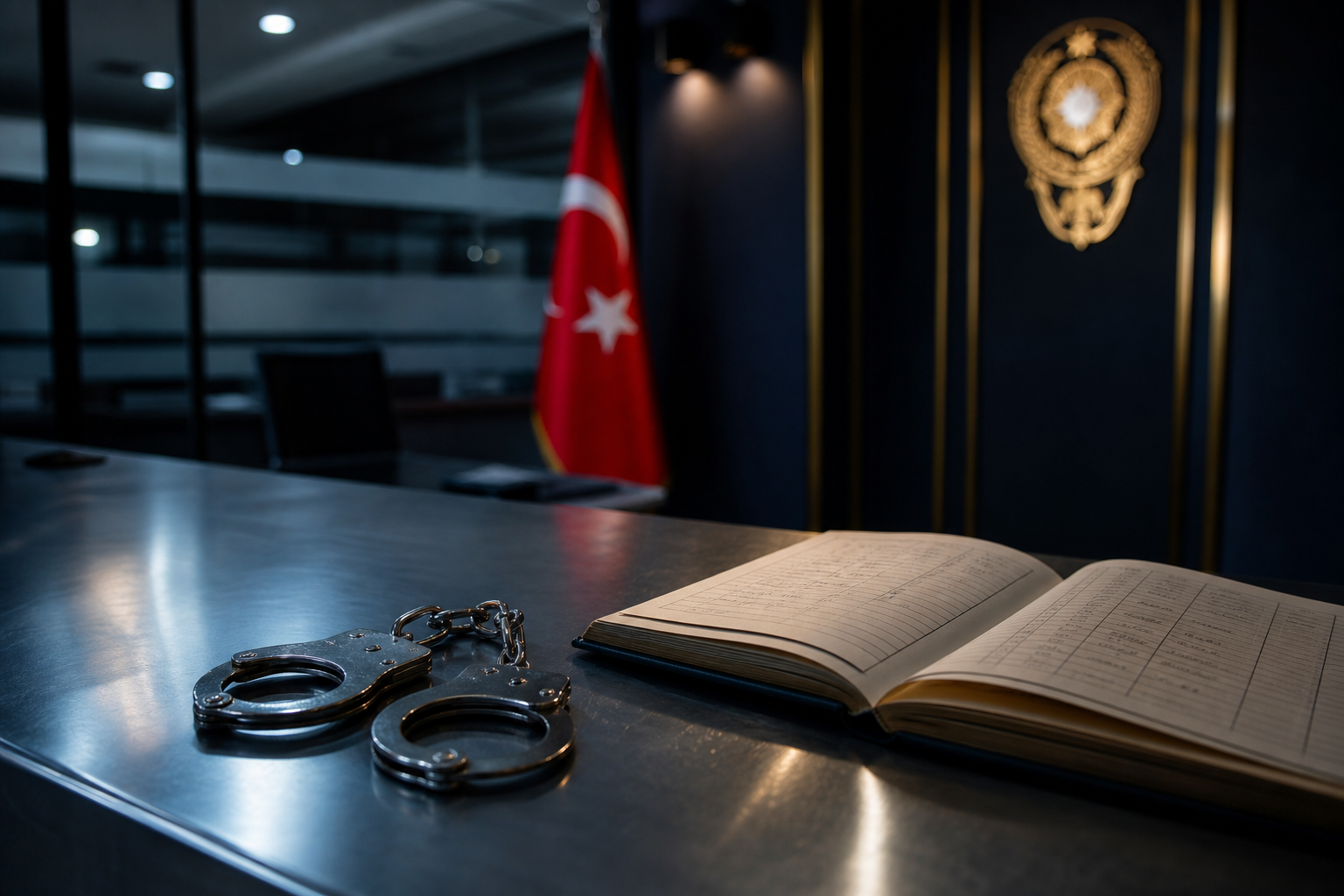
The rights recognised for the suspect and the accused in criminal proceedings are safeguards protecting a person against whom there is not yet a final judgment. Under the presumption of innocence, no one may be considered guilty until their guilt is finalised. Knowing these rights from the very outset is important for the effectiveness of the defence.
The Right to Remain Silent and Not to Incriminate Oneself
The suspect and the accused have the right not to make a statement regarding the charge directed at them, and their silence cannot be interpreted against them. Particularly in files requiring technical expert assessment, such as workplace accidents and traffic, giving statements before a legal assessment has been made may affect subsequent stages.
Benefiting from the Assistance of Defence Counsel
Every suspect and accused has the right to benefit from the legal assistance of a defence counsel from the very beginning of the investigation. A person who is not in a position to choose defence counsel and who requests one is assigned counsel by the bar association; in certain cases prescribed by law, the presence of defence counsel is mandatory.
Legal Support at Statement and Interrogation
The criminal lawyer contributes to preventing procedural irregularities by being present during statement and interrogation proceedings. While a statement is taken before law enforcement or the prosecutor's office, interrogation is conducted before a judge or the court. Statements obtained through mistreatment, wearing down or methods affecting the will cannot be used as evidence even if the person consents.
Custody, Detention and Judicial Control
Custody and detention are protective measures that restrict personal liberty and are regulated in detail in the Code of Criminal Procedure. These measures are not a penalty but temporary precautions intended to ensure the security of the proceedings, and are subject to the principle of proportionality.
The Period and Conditions of Custody
Custody is the detention of an apprehended person for a certain period by decision of the prosecutor's office. The law has set an upper limit on the period of custody; there are special regulations regarding the period for offences committed collectively. Notifying a relative of the person taken into custody and having them undergo a health check are among the legal safeguards.
Detention and the Principle of Proportionality
Detention may be applied by judicial decision only in cases where strong suspicion of an offence and a ground for detention (such as risk of flight or the danger of tampering with evidence) exist together. Detention is an exception; where it is disproportionate to the importance of the matter and the expected penalty, or where judicial control is sufficient, resort should not be had to detention.
Judicial Control and Objection to Detention
Judicial control measures such as a ban on leaving the country, an obligation to sign, or a security may be applied instead of detention. Detention and judicial control decisions may be objected to within the period prescribed by law; the continuation of detention is also reviewed at certain intervals and a request for release may be made during these reviews.
Cases Heard at the Torbalı Assize Court
Assize courts are tasked with hearing offences of the gravity prescribed by law; jurisdiction is, as a rule, determined according to the type and upper limit of the penalty prescribed for the offence. Since Torbalı has its own Assize Court, assize-level files belonging to the district are generally heard within the Torbalı Courthouse.
Offences Within the Scope of the Assize Court
Offences such as intentional killing, aggravated forms of negligent killing, aggravated robbery and aggravated fraud, together with other offences left by law to the jurisdiction of the assize court, fall within this court's jurisdiction. Fatal files arising from a workplace accident in a heavily industrial district may also be assessed within this scope depending on their gravity.
Panel Structure and Mandatory Defence Counsel
Assize courts try cases as a panel composed of a presiding judge and two members. In certain offences within scope, if the accused has no defence counsel, the assignment of defence counsel by the bar association is mandatory. The scope of the trial and the gravity of the possible sanctions require the defence to be conducted meticulously.
The Scope of the Torbalı Criminal Court of First Instance and the Criminal Judgeship of Peace
Criminal courts of first instance are tasked with hearing offences falling outside the jurisdiction of the assize court, and in practice a significant portion of criminal files is heard in these courts. Such files belonging to Torbalı are also conducted within the criminal court of first instance at the Torbalı Courthouse.
Offences Frequently Seen at the Criminal Court of First Instance
Simple injury, insult, threat, breach of trust and many offences against property mostly fall within the jurisdiction of the criminal court of first instance. In a district with dense workplaces and commercial relations, certain criminal files arising from commercial disputes may also be assessed within this scope.
The Function of the Criminal Judgeship of Peace
Criminal judgeships of peace, as a rule, decide on protective measures during the investigation stage (such as detention, search and seizure) and on objections directed against them; they do not conduct trials. Knowing this distinction is important for correctly determining which authority to apply to.
Representation of the Victim and the Complainant
In criminal proceedings, not only the suspect and the accused but also the victim and complainant harmed by the offence hold rights. A criminal lawyer may undertake the follow-up of the rights of a person harmed, in the capacity of representative for the victim or complainant. This is a heading that comes to the fore especially in workplace-accident and traffic-accident files.
Complaint, Participation and Presentation of Evidence
The victim may exercise the right to complain, present evidence to the investigation and request to participate (become a party) in the case during the prosecution stage. With the acceptance of the participation request, the complainant becomes involved more actively in the course of the trial and may resort to legal remedies.
Following Up on Behalf of a Person Harmed in a Workplace or Traffic Accident
A person injured, or the relatives of a person deceased, in an accident originating from a factory, a construction site or the motorway may take part in the criminal file as a complainant. Objecting to the expert report and the correct determination of the fault rate carry importance both for the criminal process and for connected compensation processes. The complaint period must not be missed.
The Institution of Mediation
Mediation is an institution regulated in Articles 253 and 254 of the Code of Criminal Procedure that enables the suspect or accused and the victim to reach an agreement through a mediator in certain offences. In offences within scope, mediation is a stage that must be considered before a case is filed or during the trial.
Offences Within the Scope of Mediation
Mediation is, as a rule, applied to offences whose investigation and prosecution are subject to complaint, as well as certain offences separately enumerated in the law. Offences such as simple injury, threat and damage to property are frequently seen within the scope of mediation in practice; certain forms of negligent injury may also be assessed within this scope. Mediation cannot be resorted to for offences excluded from the scope.
The Process and Its Results
If the mediation offer is accepted, the mediator meets with the parties, and if an agreement is reached, a mediation report is drawn up. If reconciliation is achieved and the obligation is fulfilled, the investigation or case may result in dismissal. If reconciliation cannot be achieved, the process continues according to the general provisions.
HAGB, Deferral and Alternative Sanctions
Even in the event of conviction, criminal proceedings include various institutions that soften the manner in which the sentence is executed. These institutions depend on the existence of the conditions prescribed by law and generally on the acceptance of the accused. In workplace-accident and traffic files arising from negligent offences, the applicability of these institutions frequently comes onto the agenda.
Deferral of the Announcement of the Judgment (HAGB)
The deferral of the announcement of the judgment is regulated in Article 231 of the Code of Criminal Procedure. For penalties below a certain limit, where the legal conditions exist and the accused accepts, the judgment is not announced and the accused is placed under a period of supervision. If the period of supervision passes without an intentional offence being committed, the case is dismissed; if the conditions are not complied with, the judgment is announced.
Deferral of the Sentence
Deferral is the conditional waiver of the execution of an imposed prison sentence on certain conditions. Where the penalty limit prescribed by law and the other conditions exist, the court may decide to defer the sentence by setting a period of supervision. If the period of supervision passes with good conduct, the sentence is deemed to have been executed.
Judicial Fines and Alternative Sanctions
Short-term prison sentences may, where the conditions exist, be converted into a judicial fine or into the alternative sanctions enumerated in law. Which institution is applicable in the concrete case is assessed by the court according to the type of penalty and the situation of the accused.
Avenues of Appeal and Cassation
The decision of the court of first instance may be challenged through legal remedies within the period and conditions prescribed by law. The ordinary legal remedies in criminal proceedings are appeal and cassation; these avenues enable the review of the lawfulness of the decision.
The Appeal Application and the Izmir Regional Court of Justice
Appeal is the legal remedy that enables the first-instance decision to be re-examined in both factual and legal terms. Appeal applications against criminal decisions issued from Izmir courthouses, including the Torbalı Courthouse, are examined by the criminal chambers of the Izmir Regional Court of Justice. It is essential that the application be made within the legal period.
Cassation Review
Those decisions of the regional court of justice for which cassation is possible by law may be appealed to the Court of Cassation within the time limit. Cassation is, as a rule, a stage at which the lawfulness of the decision is reviewed. Because some decisions are final, not every decision may be open to cassation; this distinction must be observed.
The Torbalı Courthouse and the Competent Criminal Courts
Torbalı is a district with its own separate courthouse; criminal files belonging to the district are, as a rule, heard at the courts within the Torbalı Courthouse. Units such as the Assize Court, the Criminal Court of First Instance, the Criminal Judgeship of Peace, and the Enforcement Criminal and Execution Judgeship are located at the Torbalı Courthouse.
In terms of criminal courts, jurisdiction, as a rule, belongs to the court of the place where the offence was committed. Criminal courts within the Torbalı Courthouse may have jurisdiction over offences alleged to have been committed within the borders of Torbalı. Files within the assize-court scope are heard at the Torbalı Assize Court, and those outside it at the criminal court of first instance. Files from settlements attached to Torbalı, such as Ayrancılar, are also subject to the same courthouse.
Since changes may from time to time be made in the judicial organisation, it is appropriate to confirm the current jurisdiction and competence with the relevant courthouse or with the Izmir Bar Association. The correct determination of the competent and duty-bound authority helps the process proceed without unnecessary delay.
How to Choose a Good Criminal Lawyer in Torbalı?
Rather than seeking the "best criminal lawyer," focusing on objective criteria when making a choice is a healthier approach. No lawyer can guarantee an outcome such as acquittal or release; criminal files are assessed according to the evidentiary situation specific to each event. The main criteria that may be taken into account when seeking legal support in Torbalı or across Izmir are as follows:
- Bar registration: It is a fundamental requirement that the lawyer be registered with the Izmir Bar Association and practise with a licence.
- Field of activity: It can be useful to consult a lawyer who regularly deals with criminal law files, particularly technical ones such as workplace accidents and traffic.
- Accessibility: In situations with running time limits such as custody and detention, the ability to establish rapid communication is important.
- Realistic information: An approach that honestly conveys risks and probabilities, rather than one that promises a definite outcome, should be preferred.
- Transparency: Communication that clearly explains the stages of the process, the possible scenarios and the likely expenses inspires confidence.
These criteria may be guiding in finding legal support suited to a person's own situation. You can assess criminal law services across Izmir from the Izmir criminal lawyer page, and the other legal fields in Torbalı from the Torbalı lawyer service page.
Torbalı Criminal Lawyer Fees
In criminal files, the lawyer's fee is determined within the framework of the Minimum Attorney Fee Tariff, updated each year. This tariff shows the lowest fee the lawyer may charge; the specific fee, on the other hand, is freely agreed between the lawyer and the client according to the type, stage, scope and required effort of the work.
Defence counsel work limited to the investigation stage, and a lengthy prosecution at the Torbalı Assize Court; or a workplace-accident file requiring an expert examination compared with a simple criminal-court-of-first-instance file, require different effort and time from one another, and pricing changes accordingly. For this reason it is not possible to give a single, fixed figure for every file.
In addition, costs such as fees, expert, witness and notification expenses that may arise during the trial process are items separate from the lawyer's fee. For a transparent working relationship, agreeing on the fee and expenses in writing from the outset is beneficial for both the client and the lawyer. You can review the relevant pages for the other service regions across Izmir.
The information here is of a general nature and does not substitute for legal advice. In criminal proceedings the outcome cannot be guaranteed; every file varies according to the concrete evidence and the characteristics of the event. For definite information and an assessment specific to your file, it is recommended that you consult a lawyer. Contact: 0553 595 67 82 — Milli Kütüphane Cd. İ. Tepeköylü İş Merkezi No: 17/105, 35260 Konak/İzmir (reachable 24/7).
Questions on This Topic
 Izmir
IzmirKonak Lawyer
Konak is the historic and administrative core of Izmir; the dense commercial life around the Kemeraltı bazaar, Konak Square and the Alsancak Port also brings with it various legal disputes in daily life. Workplace rent, commercial disputes, title deed matters and urban transformation are frequently on the agenda in the district. Cases and proceedings attached to Konak are, as a rule, heard within the jurisdiction of the Izmir Courthouse and the Izmir Assize Court. Av. Aydın provides legal support in various fields, primarily divorce, criminal, rent, real estate, inheritance and compensation. When looking for a Konak lawyer, setting the process up correctly from the outset reduces possible losses of rights; it is useful to have a prior assessment with a lawyer.
View Details Izmir
IzmirAlsancak Lawyer
The first thing people looking for an Alsancak lawyer wonder about is in which courthouse their cases will be heard. Alsancak, the lively and prestigious central district of Konak on the shore of the bay, is an area where various legal disputes come onto the agenda because of the density of its cafes, restaurants and entertainment venues, its office and company fabric, and its stock of valuable real estate. Workplace rent, commercial disputes, service-sector labour law, title deed and real estate matters, and company and contract issues are frequently encountered headings in the neighbourhood. Since Alsancak is a neighbourhood attached to Konak, cases and proceedings here are, as a rule, heard within the jurisdiction of the Izmir Courthouse and the Izmir Assize Court. Av. Aydın provides legal support in various fields, primarily divorce, criminal, rent, real estate, inheritance and compensation. When looking for an Alsancak lawyer, setting the process up correctly from the outset reduces possible losses of rights.
View Details Izmir
IzmirGüzelyalı Lawyer
The first question that people looking for a Güzelyalı lawyer usually ask is which courthouse will hear their case. Güzelyalı is a well-established and settled coastal neighbourhood attached to the Konak district; the seaside boulevard and promenade, the valuable apartment fabric, the upper-middle-income settled population and its connection by the İZBAN suburban line and tram give it a distinctive character. Because of its long-standing housing stock, title deed and real estate matters, condominium ownership, the renovation of old apartment buildings and rent disputes frequently come onto the agenda in the neighbourhood, while its settled family structure also brings family and inheritance matters to the fore. Since Güzelyalı is attached to Konak, cases and proceedings here are, as a rule, heard within the jurisdiction of the Izmir Courthouse and the Izmir Assize Court. Av. Aydın provides legal support in various fields, primarily real estate, rent, divorce, inheritance, criminal and compensation. When looking for a Güzelyalı lawyer, setting the process up correctly from the outset reduces possible losses of rights.
View Details